There is a reason the best laser hair removal clinics often have waitlists and loyal clients who return for maintenance years later. Results hinge on two things in equal measure: the right technology and the person operating it. The machine fires light. The specialist reads skin, hair, and risk, then uses judgment to tailor energy, pulse width, and timing. If you are searching for laser hair removal near me and trying to decode reviews, pricing, and claims of permanent laser hair removal, start with credentials. A skilled professional with the correct device can make the difference between smooth, predictable laser hair removal results and weeks of irritation.
I have seen both ends of that spectrum. In one case, a runner with Type II skin and dark coarse hair finished six underarm laser hair removal sessions with a diode device and reached 90 percent reduction, touching up once a year. In another, a client with Type IV skin had scattered burns after an alexandrite session at a day spa, then recovered and later completed a safe plan using Nd:YAG. The common thread in positive outcomes is not a magic brand of laser. It is a specialist who understands physiology, parameter selection, and safety.

What “top rated” should signal beyond stars
Ratings and laser hair removal reviews help, but they can blur convenience with competence. A modern laser hair removal spa might have same day appointments, online booking, memberships or laser hair removal packages that look affordable. None of that confirms whether the person behind the handpiece can identify melasma, adjust for recent sun exposure, or spot a medication that raises photosensitivity.
When I interview laser hair removal specialists for hiring, I listen for how they think. Do they discuss the Fitzpatrick scale without looking it up. Can they explain why the melanin absorption curve makes a 1064 nm Nd:YAG safer for darker skin. Do they ask about PCOS when a client reports persistent chin hair. Specialists who connect dots like that tend to deliver consistent laser hair reduction without drama.
Core credentials that matter
Start with licensure. In many regions, physicians, physician assistants, nurse practitioners, and registered nurses can perform laser hair removal treatment, sometimes delegating to certified laser technicians under medical oversight. Aesthetician rules vary widely by state or country. Top rated laser hair removal centers are transparent about who treats you and who supervises them. Look for a medical director you can actually meet if needed, not only a name on a brochure.
Board certification is a strong positive, especially for medical laser hair removal in a dermatology or plastic surgery setting. A board-certified dermatologist understands hair biology, skin disorders, and post-inflammatory pigmentation risks across skin types. That does not mean non-physician providers are unsafe. Many of the quiet experts are nurses or certified laser hair removal technicians with thousands of procedures logged and excellent judgment. What you want to verify is specific laser training, supervised hours, and ongoing education on laser hair removal technology.
Laser safety certification is another sign of professionalism. In the US, the National Council on Laser Certification offers credentials for laser operators. Safety courses based on ANSI Z136.3 standards teach eye protection, plume control, and room setup. Not every region uses the same framework, but a clinic that invests in formal safety training tends to have disciplined protocols.
Finally, ask how many laser hair removal sessions they perform weekly, on what devices, and for which skin types. Volume itself is not a credential, though repeated experience with your skin type is valuable. An operator who treats several Fitzpatrick IV to VI patients each day will be fluent with Nd:YAG finesse and less likely to push fluence too far, too fast.
A short credential checklist to bring to your first laser hair removal consultation
- Active professional license in your state or country, clearly displayed, plus documented laser-specific training A named medical director you can identify and contact, with clear supervision protocols Device-specific competency on the clinic’s lasers, including settings, safety, and maintenance logs Laser safety training based on recognized standards, with appropriate eye protection for all wavelengths used Before and after photos the provider personally performed, across a range of skin tones and treatment areas
Why wavelength and device families are not interchangeable
Some clinics market advanced laser hair removal without naming devices or wavelengths. A top rated clinic is comfortable being specific. Hair removal devices fall into a few core families, each with strengths.
Alexandrite lasers at 755 nm are efficient for light to medium skin with dark hair. The higher melanin absorption gives strong follicle targeting, often making this the best laser hair removal option for Type I to III clients seeking fast results on legs or arms. It also raises risk for darker skin, tanned skin, and those prone to hyperpigmentation.
Diode lasers, commonly 805 to 810 nm, dominate many medical and aesthetic settings. These can handle a broader range of skin types with the right cooling and parameter control. For underarm laser hair removal, bikini laser hair removal, chin, and back laser hair removal, diode systems provide a good balance of speed and safety for Types II to IV.
Nd:YAG lasers at 1064 nm are the workhorses for dark skin. The deeper penetration and lower melanin absorption in epidermis reduce surface injury risk, which is why these are preferred for laser hair removal for dark skin, especially for the face, neck, and bikini areas. The trade-off is that finer, lighter hairs absorb less energy at this wavelength, so expectations must be set early.
The best clinics do not claim one device is perfect for everyone. They match wavelength to your hair, skin tone, and treatment area, then adjust pulse width and spot size to suit the target depth and diameter. Proper epidermal cooling through contact cooling, cryogen spray, or chilled air matters as much as fluence when it comes to comfort and safety.
If you visit a laser hair removal salon that uses intense pulsed light (IPL) for everything, push for details. IPL can reduce hair in selected cases, but it is not a laser and is less selective. A professional laser hair removal plan may include IPL in limited scenarios, yet most top rated clinics lean on diode, alexandrite, or Nd:YAG for predictable laser hair removal effectiveness.
The art of parameter selection
Novices focus on the number of joules. Experts think in hair diameter, anagen synchrony, and thermal relaxation time. Coarse hair, like male beard or bikini, tolerates more energy and longer pulse durations than fine facial hair. Pulse stacking without adequate cooling raises blister risk. Large spot sizes often penetrate slightly deeper and can allow lower fluence with the same effect, useful for leg laser hair removal and back laser hair removal.
One indicator you are with a seasoned operator is how they use test spots. A quick series with incremental fluence, assessed over 48 to 72 hours, tells them more than any chart. If you have melasma, recent sun exposure, or are on isotretinoin within a medically relevant window, a cautious specialist will defer or adjust. They will also ask about photosensitizing medications such as doxycycline or certain acne topicals, and discuss risks of post-inflammatory pigmentation, especially for laser hair removal for sensitive skin.
Safety protocols you should see and feel
Safety is visible if you know where to look. Eye protection is non-negotiable for you, the specialist, and anyone in the room, matched to the device’s wavelength. Rooms should have warning signage. The handpiece window should be clean, tips changed or sterilized per manufacturer guidelines, and smoke evacuation used during treatment. A patch test before full face laser hair removal or Brazilian laser hair removal is prudent, particularly for first-time clients or darker skin tones.
Consent forms are more than paperwork. They should cover laser hair removal side effects such as redness, swelling, perifollicular edema, risk of burns, pigment changes, and rare paradoxical hair growth in certain areas. Aftercare instructions should specify timelines: cool compresses immediately post-treatment, topical recovery aids as appropriate, and strict sun protection for two weeks or more.
A note on pain management. Painless laser hair removal is a marketing stretch. Cooling makes a big difference, as does cadence. Top clinics will scale sessions to tolerate discomfort without rushing. For sensitive zones like upper lip or bikini, topical anesthetics can help, but they are used judiciously because numbing can mask excessive heat. Honest specialists will tell you the pain level is brief and manageable for most, but not zero.
What a high quality consultation sounds like
A thorough laser hair removal consultation sets the tone for your plan. Expect a discussion of your medical history, hormones, medications, tanning habits, and past hair removal methods. Waxing and plucking need to stop well before the first laser hair removal appointment because the laser targets the follicle. Shaving stays in play. The specialist should identify your Fitzpatrick skin type, examine hair color and thickness, and explain whether you are a good candidate for permanent laser hair removal or better framed as long term reduction.
Timelines are not one size fits all. Facial hair cycles faster than body hair, so facial sessions might be every 4 to 6 weeks, while legs, back, and arms run every 6 to 10 weeks. Most clients need 6 to 10 laser hair removal sessions for a meaningful reduction, sometimes more for hormonal areas like chin, neck, or stomach. The clinic should share a realistic laser hair removal timeline, what percentage reduction they typically see, and the likelihood of maintenance visits once or twice a year.
A clinic that encourages you to start small is often confident in their work. An underarm trial or a small area like the upper lip gives you a feel for the laser hair removal process, recovery, and how your skin reacts. From there, moving to full body laser hair removal or larger zones becomes an informed choice rather than a leap.
Preparing for your consultation and first session
- Pause waxing, threading, or plucking for 3 to 4 weeks, and shave the day before your visit so hair shafts are present but not above the skin Avoid tanning and self-tanners for at least 2 weeks, longer if you tan easily, and bring your usual sunscreen to reinforce habits List all medications and supplements, especially antibiotics, acne treatments, and anything that raises photosensitivity Photograph the treatment areas in good light for personal laser hair removal before and after comparison Write your goals in concrete terms, for example, fewer ingrowns after bikini laser hair removal or faster shaves on the chest
Matching devices to common treatment areas
Face laser hair removal for women often targets the upper lip, chin, and sideburns. Finer hair here can be stubborn, and hormone shifts can stimulate regrowth. A diode with conservative settings or an Nd:YAG for darker skin tones reduces risk of pigmentation. Careful spacing and patience help, because pushing energy to force quick results on fine hair leads to irritation.
Laser hair removal for men on the neck and beard line is one of the most gratifying treatments. Fewer razor bumps, less folliculitis, and cleaner edges. It is also where poor technique shows, because the skin is contoured and vascular. Expect a plan that respects weekends or event timelines, since redness can last a day or two.
Back and chest laser hair removal reward machines with large spot sizes and robust cooling. Sessions stay efficient without overheating the epidermis. The hair here is often coarse enough for strong reduction within several visits, with some maintenance as hormones evolve.
Underarm and bikini laser hair removal are high yield because hair tends to be dark and coarse against lighter skin, though that contrast varies. Ingrown reduction becomes noticeable by session two or three, which builds confidence in the process. Brazilian laser hair removal demands extra discretion, privacy, and a provider who outlines positioning and communicates during passes.
Leg laser hair removal is a marathon rather than a sprint. The area is large, hair cycles are slower, and sessions are spaced further apart. When done well, the long term payoff is significant. A top rated clinic will sequence legs with other areas carefully to make the whole plan manageable.
The money conversation: cost, packages, and what value looks like
Laser hair removal cost varies by city, device, and who performs the treatment. You will see laser hair removal price ranges that reflect square inches, complexity, and clinic reputation. As rough context, single session fees can cluster like this in many urban markets: underarms 75 to 150, bikini 100 to 250, Brazilian 150 to 350, lower legs 200 to 400, full legs 350 to 600, chest or back 250 to 600. Full body laser hair removal packages can start around 1,500 and climb past 3,000 depending on scope and number of sessions. These are ballpark figures, not quotes. Always verify locally.
Packages and memberships can be a good value if they align with a realistic laser hair removal treatment plan. Strong clinics structure packages around expected session counts, allow flexibility to swap areas of similar size, and do not penalize you for seasonal spacing or travel. Be wary of laser hair removal deals that read like a gym contract. You want transparent terms, simple cancellation, and no surprises if you need a pause for vacation or a skin flare.
Financing options are common. They help, but do not confuse payment smoothness with clinical quality. Ask how the package interacts with touch-ups, because a final 10 percent of hair often requires targeted visits over the following year.
Red flags that argue for a different clinic
A technician who cannot name the wavelength they will use is not ready to treat you. A provider who waves away your recent tan or shrugs at a history of keloids is not listening. A clinic that refuses a patch test for darker skin or sensitive areas is rushing. If you never meet or cannot identify the medical director in a setting that claims physician oversight, move on. Likewise, photos stolen from manufacturer brochures rather than the clinic’s own laser hair removal before and after work should give you pause.
On the flip side, a provider who tells you that some vellus facial hair will not respond, that blond or gray hair is a poor target, and that true permanent results are better described as long term reduction, is telling you the truth. That is who you want.
Setting expectations: results, maintenance, and edge cases
Most clients achieve 70 to 90 percent reduction after a full course. The spread reflects genetics, hormones, hair color and thickness, adherence to schedule, and device selection. Dark coarse hair on light skin responds fastest. Fine light hair responds least. Areas influenced by androgens, such as chin, neck, chest, and stomach, may need more sessions and occasional maintenance. Laser hair removal for thick hair often shows dramatic early change, but the last stubborn hairs can take finesse.
There are edge cases. Polycystic ovary syndrome can drive recurrent facial hair. Some clients with very sensitive skin prefer slower progress with conservative settings to avoid downtime. Rare paradoxical hypertrichosis, where hair increases in certain zones, is more often reported in the face and neck of darker skin types with low fluence exposure. An experienced specialist will discuss this early and adjust the plan to minimize risk.
Downtime is usually mild. Expect pinkness, follicle swelling, and a sunburn feel for several hours. Good aftercare includes cool compresses, gentle cleansers, fragrance-free moisturizers, and diligent sunscreen. Avoid hot yoga, saunas, retinoids, and exfoliants for a couple of days. Those who follow aftercare see cleaner recoveries and fewer pigment issues.
Technology evolves, but fundamentals hold
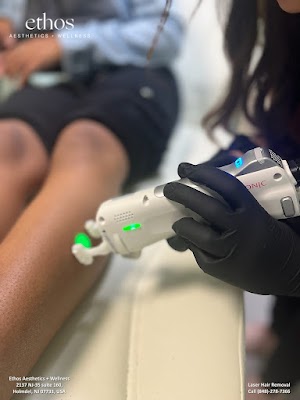
Manufacturers innovate around speed, cooling, and motion-based delivery. Some diode platforms market in-motion techniques that feel like a warm massage rather than discrete pulses. These can be comfortable for large areas, though skilled hands still matter to ensure adequate energy delivery. The laser hair removal machine is only as effective as the laser hair removal near me Holmdel Ethos Aesthetics + Wellness settings chosen and the skin in front of it. Advanced laser hair removal claims are best interpreted by someone who can translate them into meaningful choices for you.
Periodic maintenance of devices matters too. A clinic that tracks shot counts, replaces handpiece windows, and keeps calibration logs is paying attention. That attention tends to show up in consistent laser hair removal results.
How to compare clinics in a crowded market
If you live in a city with many options, shortlist three places for consultations. Put a dermatologist-led laser hair removal skin clinic on the list, a high performing laser hair removal center with strong technician depth, and perhaps an aesthetic clinic that focuses on body treatments. Take notes on how each clinic evaluates you, not just how they sell. The right provider will ask more questions than you do, set a measured laser hair removal frequency, and be specific about which wavelengths they will use on which areas. They will explain the differences between laser vs waxing hair removal and laser vs shaving hair removal in practical terms, including ingrown reduction and long term cost.
Sit with the numbers. An affordable laser hair removal package from a seasoned team often beats a rock-bottom special that needs rework. Smarter to invest in professional laser hair removal done right than to chase laser hair removal deals that leave you managing side effects.
When a dermatologist referral helps
If you have a history of melasma, keloids, vitiligo, or active acne with cysts in the target area, a dermatologist’s input can save you grief. Those with very dark skin seeking face or neck treatments benefit from clinics with deep Nd:YAG experience. Laser hair removal for women dealing with hormonal imbalances or for men with dense beard shadows can both ride along with medical care that addresses root causes. A dermatologist can also help differentiate conditions like hirsutism from cosmetic concerns and guide realistic expectations.
Putting it all together
Finding top rated laser hair removal is not luck. Start with credentials and safety training. Match devices to your skin and hair. Demand a thoughtful consultation and a plan you can follow. Expect clear aftercare and candid talk about side effects. Use price as one factor, not the compass. If you do that, the steady rhythm of well-timed laser hair removal sessions becomes routine. You see fewer ingrowns, smoother skin, less time in the shower, and a calendar that is not built around waxing. That is what worth it looks like.
The best specialists I have worked with share a posture of curiosity and restraint. They test, watch, and adjust, not because they are timid, but because they are precise. On the surface, laser hair removal looks like light hitting hair. In skilled hands, it is a series of small, smart decisions that add up to durable results.